

Wilmot
MacDonald
at the
Miramichi
Folksong Festival
Maine Folklife Center CD 0001
A picture of Wilmot
A history of this publication
The Songs
Sandy Ives
Credits

A picture of Wilmot
A history of this publication
The Songs
Sandy Ives
Credits
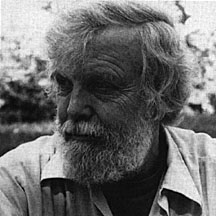
 Photograph of Wilmot MacDonald
Preservation Project leads to publication
Here at the Northeast Archive of Folklore and Oral History, as the two-year audio preservation project funded by the National Endowment for the Humanities draws to a close, two things strike my ear as being most remarkable -- the extensive oral history of Rob Golding of Perry, Maine, recorded by Archie Stewart between 1960 and 1966, nearly forty hours of tape, and the many hours of folksongs that are stored here. These songs are sung a cappella, for the most part, and hark back to the ages before electricity, conjuring images of folk filling long evenings about the oil lamp with story and song. They are also quite cleansing to the modern ear, bombarded, as we are, by often over-produced, over-orchestrated music that is far less complex in both melody and lyrics than these songs developed by the solo voice over centuries.Part of the preservation project from the beginning has been to produce a series of CDs drawn from the Archive. I was directed toward specific material and provided context by our then-archivist Steve Green, a very knowledgeable musicologist as well as an excellent archivist. (Steve is now the archivist for the Western Folklife Center in Elko, Nevada.) As the work proceeded through the winter of 1999, I would file away individual songs that might be included in a CD with the working title A Cappella Songs from the Northeast Archive. I met with Smoky McKeen, who has done extensive work with some of the same material toward producing Songs of the Lumberwoods. We also had Mostly Irish, leavened with a few Scottish ballads, and The Best of the Miramichi Folksong Festival, which a few months later led to the work at hand.
The Best of Miramichi at that time was drawn from a series of very delicate tapes recorded by Helen Creighton in 1958 at the very first Miramichi Festival in New Brunswick. These tapes were well recorded, full track, 7.5 i.p.s., with good saturation and a fairly good signal-to-noise ratio, but they were apparently first generation copies of Ms. Creighton's original recordings which are now in the Public Archives of Nova Scotia. To make matters worse, to save cost, apparently, they had been recorded on short ends of old CBC tapes which had been spliced together to fill out the several reels. No tape had fewer than ten splices, and one had over forty. Now, over forty years later, every single splice was dried out, and the tapes flew apart at the slightest touch. After weeks of work the splices were repaired, the recordings were preserved, and we had ample material to fill out several CDs, or so I thought.
Please understand that I was not playing with a full deck. I was making editorial decisions having heard only a small portion of the audio tapes housed here. Given my work as the Archive's preservation specialist, I am obliged to deal with the oldest and most fragile recordings first. Nevertheless, my subjective opinions about the Rob Golding tapes and the Miramichi tapes had been corroborated by Steve Green and by Smoky McKeen and by Sandy Ives himself, all of whom have a much better sense of the whole Northeast Archive than I. What I didn't know then was that back there at the first Miramichi Festival in 1958 Sandy Ives had been sitting right next to Ms. Creighton with his own tape recorder rolling, producing different and in many ways better recordings of some of the same songs.
This raises the question of whether it is appropriate for me to be acting as both a preservationist and a producer. An absolutist might hold that as a preservationist I should not be making subjective editorial decisions about archive materials at all, that I should concentrate, rather, on the two-track, "belts and suspenders" approach to sound preservation, i.e., producing flat analog Preservation Masters of original recordings backed up by enhanced digital copies -- CDs -- stored in separate cool and dry facilities.
In practice, it would be rather a waste of both time and money to mechanically transfer old tapes to new media without forming subjective opinions. So long as my opinions do not interfere with the preservation of materials I may not like, the knowledge gained about the content and quality of the tapes as they are being preserved has value in itself, especially when that knowledge can be applied to selecting specific passages from the Archive for publication or broadcast. Such broader distribution is arguably the best means of preserving worthy materials, once the "belts and suspenders" are in place, and it has the added benefit of advertising to a broader audience the value and depth of our holdings at the Northeast Archive.
Be that as it may, as I began working on Sandy's tapes -- 1961 recordings from the fourth Miramichi Festival -- I continued to select out individual songs that might be included in one or another CD. Already the best voice in The Best of Miramichi was that of Wilmot MacDonald. Already he provided the introduction, the climax, and the resolution. When I first heard Sandy's recording of Wilmot along with his son and four daughters singing a rollicking rendition of the sad tale of The Wexford Lass, I began jumping around the Edward D. "Sandy" Ives Preservation Sound Lab in the joyous realization that here was the last piece needed for an All-Wilmot CD.
Early on I had heard Sandy say that his next book would be about Wilmot MacDonald, but when I asked him about it shortly after his retirement last September, he allowed as how the project was not a high priority. After hearing a preview copy of Wilmot MacDonald at the Miramichi Folksong Festival produced by Kevin Champney and me, however, Sandy wrote, "First of all, I'm delighted to have this thing in the works. A record -- or a series of records -- showing off Wilmot's fantastic talent is one of the projects I'd planned for my retirement. I even made a start at it, but it got back-burnered. You guys have taken a wonderful initiative here."
Since then, Sandy has taken an active hand in selecting and ordering tracks for Wilmot's CD and is hard at work on a third draft of the text. I have replaced Helen Creighton's recordings from the first Miramichi with Sandy's recordings and am slowly working through the songs cleaning the sound as much as I can. Of a possible 74 minutes on the CD, we have filled 73. Sandy is in touch with Wilmot's children, trying to determine who sings which verse of The Wexford Lass, and the whole thing will be published next fall as Volume 36 of Northeast Folklore. A good work, all in all, and I call it a day well spent.
- BBWms

Bibliography
For more on Wilmot MacDonald, see:

The Songs
1. Lumberman's Alphabet
(6 min 59 sec) Opening number of the fourth Miramichi Folksong Festestival, August 1961, Edward D. Sandy Ives recording 61.1, Preservation Master PM-301
(5:53) Ives 1.43
(6:22) Ives 1.76
4. Joe Brook
(5:36) Ives 148
(4:55) Ives 1.80
(3:53) Ives 1.78
(5:25) Ives 61.2
(9:15) Ives 61.3
(6.11) Ives 61.4
10. The Wexford Lass
(6:50) Ives 61.3
11. Skibbereen
(5:48) Ives 65.1
12. Peter Emberly(5:50) Ives 1.69

 Maine Folklife Center
Department of Anthropology
Northeast Archive of Folklore and Oral History
Edward D. Sandy Ives
Preservation Sound Lab
Lumberman's Alphabet
as per Wilmot MacDonald
A for the axes, that's as you all know,
B for the boys that can use them also,
C for the chopping which now began,
And D for the danger that we do stand in,
and how merry are we?
No mortal on earth
is as happy are we.
Tell me high derry, ho derry, high derry down.
Give the chanty boys whiskey,
there's nothing goes wrong.
E for the echo that rings through the wood,
F for the foreman that bosses the job,
G for grindstone we grind our ax on,
And H for the handle so smooth wore around,
and how merry are we?
No mortal on earth is as happy are we.
Tell me high derry, ho derry, high derry down.
Give the chanty boys whiskey, there's nothing goes wrong.
I for the iron we mark out our pine,
J for the jovial that's always inclined,
K for keen edge we all have to keep,
And L for the lice, boys, that o'er our shirts creep,
and how merry are we?
No mortal on earth is as happy are we.
Tell me high derry, ho derry, high derry down.
Give the chanty boys whiskey, there's nothing goes wrong.
M for the moss we sod in our camp,
N for the needle we sew our pants,
O for the owl that screeches by night,
And P for the tall pine that we do slay right,
and how merry are we?
No mortal on earth is as happy are we.
Tell me high derry, ho derry, high derry down.
Give the chanty boys whiskey, there's nothing goes wrong.
Q for the quarrelling that we don't allow,
R for the rivers where we make our bow,
S for the sleds built so stout and so strong,
And T for the big team that hauls them along,
and how merry are we?
No mortal on earth is as happy are we.
Tell me high derry, ho derry, high derry down.
Give the chanty boys whiskey, there's nothing goes wrong.
U for the uses we put ourselves to,
V for the valleys we run our roads through,
W is for the woods we leave in the spring,
So now I have sung all I'm going to sing.
There are three more letters
I can't bring in rhyme,
And if you can tell me,
please tell me in time,
and how merry I'll be.
No mortal on earth
is as happy are we.
Sing a high derry, ho derry, high derry down.
If the chanty buys whiskey,
there's nothing goes wrong.
The Merner Song
Oh, good people, pay attention. This song I'll sing to you,
Concerning Bessie Sargent and Billy Merner too.
'Twas the middle of November, he came to Darlingtown,
And he moved in with the Sargents,and he tried to settle down.
He seemed to be contented, and he said he liked the place,
But little did poor Bessie think that he'd disgrace her place.
Oh Merner was a big man, a man both stout and tall.
You'd think he was as fine a man as ever had a gall.
He planned with Wilmot MacDonald that a-hunting they would go,
And that they'd leave in the morning, that's if it didn't snow.
They shouldered their two rifles and started for the plain,
And everything that come their way was sure to be Merner's gain.
They roamed the woods together, cross plains both large and small,
But Merner was a clumsy man, and sometimes he would fall.
For when Bill Merner, he did fall, he made such a terrible sound,
If there was a deer within a mile, he'd hit for higher ground.
When they were tired of hunting, they both returned to home.
He gave his gun to Wilmot and swore no more he'd roam.
He ate a hearty supper, and off to bed he went.
He seemed to be well satisfied and called it a day well spent.
Now everything went perfect, about two weeks or three,
'Til Merner thought he'd go to town and have a little spree.
He stayed in town for three days, drinking beer and wine,
But no one seemed to mind him, for it was Christman time.
He came back into Bessie's feeling pretty blue.
Bessie said to Merner, "Is your grub not suiting you?"
He sent one of those Harris boys for lemon into town,
And he drank four bottles of lemon, and he ate a quarter of lamb.
Three days after Christmas, Merner flew into a rage.
You'd think he was a lion just let out of his cage.
The way he raped poor Bessie, it surely was a sin,
And he gathered up his rig, and he left for Jimmy Quinn's.
Now my song is ended. I think I've sang enough,
And if you'll all agree with me, you'll say it's rather rough.
But any man or woman, if their head is good and sound,
Will never let Bill Merner come back to Darlingtown.
The Pride of Glencoe
Oh, one evening, one evening, as I roamed out of late,
Where the flowers were all blooming, did the fields decorate,
As I carelessly wandered to a place I did well know
Down by yon crystal fountain to a place called Glencoe.
Oh it's there I met a fair maid, as fair as the sun,
And the first time that I saw her my heart she had won.
I said, "My pretty fair maid, if along with me you you'll go,
You will bless the happy hour that we met in Glencoe."
"Oh no sir, oh no sir, your suit I disdain.
For I once had a sweetheart, young Donald by name.
He has gone to the war about ten years ago,
And I shall wait and mourn for Donald, he's the pride of Glencoe."
"Oh, it's do not trust young Donald, or honor his name,
For perhaps he is courting some other fair dame,
Or perhaps he is married for all that you know,
And has quite forgot the bonny lass that he left in Glencoe."
"Oh, it's no sir, oh no sir, from his word he'd not part,
For it's truth, love and honor have a place in his heart.
If he never returns, then unmarried I shall go,
And I'll weep and mourn for Donald, he's the pride of Glencoe."
When I saw she was so constant, I pulled out a glove
That she gave me on parting as a token of love.
As she leaned upon my shoulder and down the tears did flow,
She said,"You're welcome back, MacDonald, you're the pride of Glencoe."
"Oh, it's yes, I am MacDonald. Your troubles are o'er.
Though the cannons in the distance like thunder may roar,
And the rough storms on the oceans forever may blow,
For peace, joy, and contentment, we'll remain in Glencoe.
Joe Brook
[Lyrics to be uploaded soon - May 2000]
The Rosy Banks So Green
[Lyrics to be uploaded soon - May 2000]
The Rock Island Line
[Lyrics to be uploaded soon - May 2000]
The Chapeau Boys
[Lyrics to be uploaded soon - May 2000]
The Scow on Cowden Shore
[Lyrics to be uploaded soon - May 2000]
The Little Bull Song
[Lyrics to be uploaded soon - May 2000]
The Wexford Lass
[Lyrics to be uploaded soon - May 2000]
Skibbereen
[Lyrics to be uploaded soon - May 2000]
Peter Emberly
[Lyrics to be uploaded soon - May 2000]